






Introduction: The Rise of a Digital Revolution
Esports has evolved from a niche hobby into a mainstream global phenomenon, capturing the attention of millions worldwide. What started as a few competitive gamers in basements and local LAN events has now grown into a multi-billion dollar industry, complete with professional leagues, sponsorships, streaming platforms, and millions of passionate fans. It’s no longer just about playing video games; esports has become a legitimate career, with players, coaches, and organizers at the forefront of this new entertainment frontier.
So, what exactly is esports? It refers to organized, multiplayer video game competitions, particularly between professional players, individually or as teams. With the increasing popularity of games like League of Legends, Dota 2, Fortnite, and Counter-Strike, esports is no longer confined to a niche group of players but has expanded into a full-fledged global industry, comparable in size to traditional sports. This blog post delves into the various facets of esports, from its growth to the role of players and teams, to the future of the industry.
The Birth of Esports: From Casual Competitions to Global Tournaments
Esports has roots that go back as far as the 1970s and 1980s, when games like Space Invaders and Pong sparked the idea of competition in the gaming world. However, the real turning point came in the late 1990s and early 2000s, with the advent of the internet, which allowed players from all over the world to compete against each other in real-time. The first significant milestone in esports was the creation of competitive tournaments for StarCraft, a real-time strategy game, in South Korea during the late 1990s. These tournaments brought a professional structure to competitive gaming, with fans watching matches live in arenas and on TV, laying the groundwork for the global esports industry we see today.
During this time, esports was still largely underground, with gaming communities often meeting in small tournaments and LAN (Local Area Network) parties. It wasn’t until the early 2000s that streaming platforms like Twitch and YouTube Gaming began to revolutionize how fans consumed esports. The ability to watch live tournaments online made it possible for fans to follow their favorite players and teams without ever stepping foot in an arena. This new accessibility helped fuel the exponential growth of esports worldwide.
Key Games and Genres that Shaped the Esports Landscape
While esports encompasses a wide range of video game genres, certain games have defined and propelled the industry into mainstream recognition. The games that dominate esports competitions tend to have high skill ceilings, strategic depth, and broad appeal, allowing them to maintain longevity and relevance in the esports ecosystem.
- Real-Time Strategy (RTS) Games: StarCraft and Warcraft were early pioneers in competitive gaming. StarCraft in particular helped establish esports in South Korea, where professional leagues, broadcasting channels, and a dedicated fanbase emerged.
- First-Person Shooters (FPS): Games like Counter-Strike, Call of Duty, and Overwatch transformed esports by introducing fast-paced, tactical team-based gameplay. These games have a huge emphasis on skill, reflexes, and teamwork, making them exciting to watch for both casual and hardcore fans alike.
- Multiplayer Online Battle Arenas (MOBAs): League of Legends, Dota 2, and Smite have been the heavyweights of esports. These games combine strategic gameplay with intense team battles, where players take on the roles of unique characters and work together to destroy the opposing team’s base. League of Legends, for example, has become one of the most watched and lucrative esports, with massive annual prize pools and a truly global fanbase.
- Battle Royale Games: Fortnite and PUBG introduced a fresh genre in esports with their battle royale formats. These games are fast-paced and dynamic, where players fight to be the last one standing in an ever-shrinking battlefield. The success of Fortnite in particular brought in a new, younger audience to esports and paved the way for future battle royale games.
The Players and Teams: The Digital Athletes Who Drive Esports
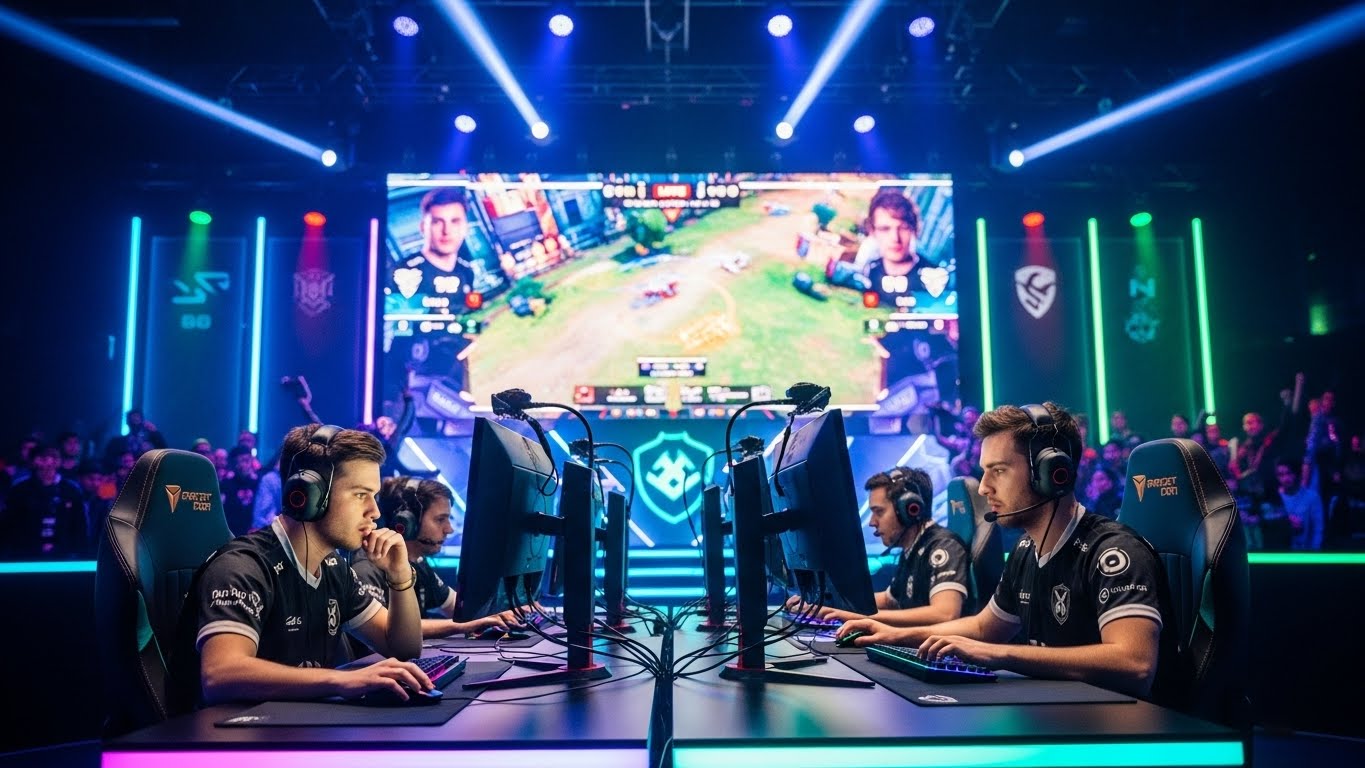
At the heart of every esports event are the players. Much like traditional sports, esports athletes dedicate their lives to mastering their craft. Top-tier players are known for their extraordinary hand-eye coordination, lightning-fast reflexes, deep strategic understanding, and hours of practice each day.
Becoming a professional esports player isn’t easy. The path to success often starts in online communities, where players build reputations and compete in smaller tournaments. Some players rise to prominence by dominating these local events, eventually attracting the attention of major organizations. Once they sign with a professional esports team, the real work begins. Players train rigorously, often participating in daily practice sessions, team strategy meetings, and scrims (practice matches against other teams).
In esports, teams are often sponsored by major corporations, technology companies, and even global brands. These sponsorships bring in the financial backing necessary for teams to support their players and travel the world for tournaments. Popular organizations like Cloud9, T1, and Team Liquid have their own training facilities, coaching staff, and analysts, creating a professional environment similar to that of traditional sports teams.
Esports players also engage with their fanbase through live streaming platforms like Twitch, where they stream their gameplay, interact with fans, and build their brand. This direct connection between players and their audiences has helped elevate esports beyond the competition itself, creating a new form of entertainment where fans are as much a part of the experience as the athletes.
Esports and the Global Fanbase: A New Kind of Spectator Sport
One of the most remarkable aspects of esports is its ability to connect fans from all corners of the world. Whether watching a League of Legends world championship or a Counter-Strike: Global Offensive major, esports spectatorship is a truly global affair. Events often attract tens of millions of viewers, some watching live in massive arenas while others tune in remotely via streaming services.
Streaming platforms like Twitch and YouTube Gaming have become the go-to destinations for fans to watch live events, interact with players, and stay up to date with the latest in the esports world. Unlike traditional sports, where spectators are limited by geography, esports can be consumed by anyone with an internet connection. This global accessibility has allowed esports to flourish, creating communities that transcend borders.
What’s more, esports fans are incredibly engaged. They not only watch the games but also create content, discuss strategies, and cheer for their favorite players and teams. In this sense, esports is more than just a spectator sport; it’s a community-driven phenomenon. The interaction between fans and players has led to a new form of entertainment where the audience plays an active role in shaping the experience.
The Business of Esports: Money, Sponsorships, and Media Deals
As esports has grown in popularity, it has attracted significant financial investments from a wide range of industries. Sponsorships, advertising, and media rights are major revenue streams, with companies from all sectors eager to tap into the young, tech-savvy audience that makes up the core of esports’ fanbase.
Brand sponsorship is a huge part of esports’ financial ecosystem. Companies like Intel, Red Bull, and Coca-Cola have become prominent sponsors of esports teams and tournaments, providing funding in exchange for brand visibility. In addition to sponsorships, esports organizations also generate revenue through merchandise sales, ticket sales to live events, and media deals that allow games to be broadcast on television or online platforms.
One of the most significant aspects of esports’ growth has been its ability to attract the attention of mainstream media. Major networks like ESPN and Turner Broadcasting have broadcast esports events, and streaming platforms like Twitch have made esports content more accessible than ever. As a result, esports is being increasingly recognized as a legitimate form of entertainment, with the potential for even more growth in the coming years.
The Future of Esports: What Lies Ahead
The future of esports looks incredibly bright. With a growing fanbase, increasing investment, and technological advancements on the horizon, esports is poised to continue its expansion into new markets and demographics. One potential area of growth is the inclusion of esports in the Olympic Games, which has been a topic of discussion in recent years. While there are still hurdles to overcome, esports may eventually become a part of the prestigious event, further legitimizing its status as a mainstream sport.
Additionally, the development of new technologies like virtual reality (VR) and augmented reality (AR) may change how games are played and experienced. These innovations could lead to even more immersive and interactive esports competitions, making the spectator experience even more engaging. Esports may also become a more prominent fixture in education, with universities offering scholarships and academic programs in esports management and game design.
Conclusion: A New Era of Competitive Entertainment
Esports has come a long way since its humble beginnings. It has evolved into a global phenomenon that connects millions of fans and players across the world. With its blend of skill, strategy, and entertainment, esports has become more than just a hobby or an event – it has become a cultural force. As technology continues to advance and the industry grows, esports is set to redefine the future of competitive entertainment, creating new opportunities for players, fans, and investors alike. For those who grew up playing video games, esports has become the ultimate realization of that passion, with the promise of even greater things to come.