





Esports has grown into one of the most competitive and rapidly developing industries in the world. Behind every successful professional player lies countless hours of disciplined, methodical practice. While talent may open the door, it is effective training and consistency that determine who rises to the top. The best esports players are not only defined by their in-game skill but by the way they structure their improvement, analyze their weaknesses, and prepare mentally and physically.
In this comprehensive article, we will explore the best practice techniques used by top esports players across different genres — from first-person shooters to MOBAs and fighting games. These methods go far beyond playing for hours; they represent a scientific and holistic approach to performance optimization.
The Foundation of Mastery: Structured Practice Over Volume
One of the most common misconceptions among new players is that improvement comes purely from spending endless hours in the game. Top professionals understand that how you practice matters far more than how long you practice.
Elite players follow structured training routines. They set daily objectives, focusing on one or two aspects of gameplay per session. For instance, a Counter-Strike 2 player may dedicate an hour purely to recoil control, another to positioning, and a third to team coordination drills. In League of Legends, pros isolate micro-skills like last-hitting, ward placement, or skill-shot prediction before moving on to scrimmage sessions.
This approach mirrors professional athletes who dedicate specific sessions to conditioning, technique, or strategy. Structured practice ensures efficiency, reduces burnout, and allows measurable progress.
The Importance of Warm-Ups and Mechanical Drills
Before entering competitive play, top players dedicate time to warming up. This phase is not just physical preparation but mental calibration. FPS players, for example, spend 30–60 minutes in aim trainers or custom maps to fine-tune hand-eye coordination and reaction timing. Popular tools like Aim Lab or Kovaak’s help refine muscle memory and targeting precision.
In MOBAs or RTS games, players warm up by playing quick matches or performing solo exercises like practicing last hits or build orders. Fighting game professionals rehearse combos and frame-perfect inputs to sharpen execution.
The purpose of a warm-up is to get into the flow state where reflexes and decision-making align seamlessly. Just as basketball players shoot free throws before a game, esports players activate their cognitive and motor systems to achieve peak readiness.
Reviewing Replays and Self-Analysis
One of the defining traits of elite players is their dedication to reviewing their own gameplay. Top-tier competitors treat replays as a critical learning tool, analyzing every mistake, decision, and opportunity.
After every match, they identify what went wrong and why. Was it a positioning error, poor map awareness, or a mechanical misplay? Did they fail to communicate crucial information to teammates? This reflective process transforms every loss into a valuable lesson.
Many pros maintain notebooks or digital logs where they document recurring issues or strategies that worked well. By doing so, they create a personalized improvement roadmap. This analytical mindset mirrors that of traditional sports athletes who review match footage to understand patterns and refine techniques.
Over time, self-analysis builds mental sharpness, pattern recognition, and adaptability — three qualities that separate good players from great ones.
Team Scrims and Communication Training
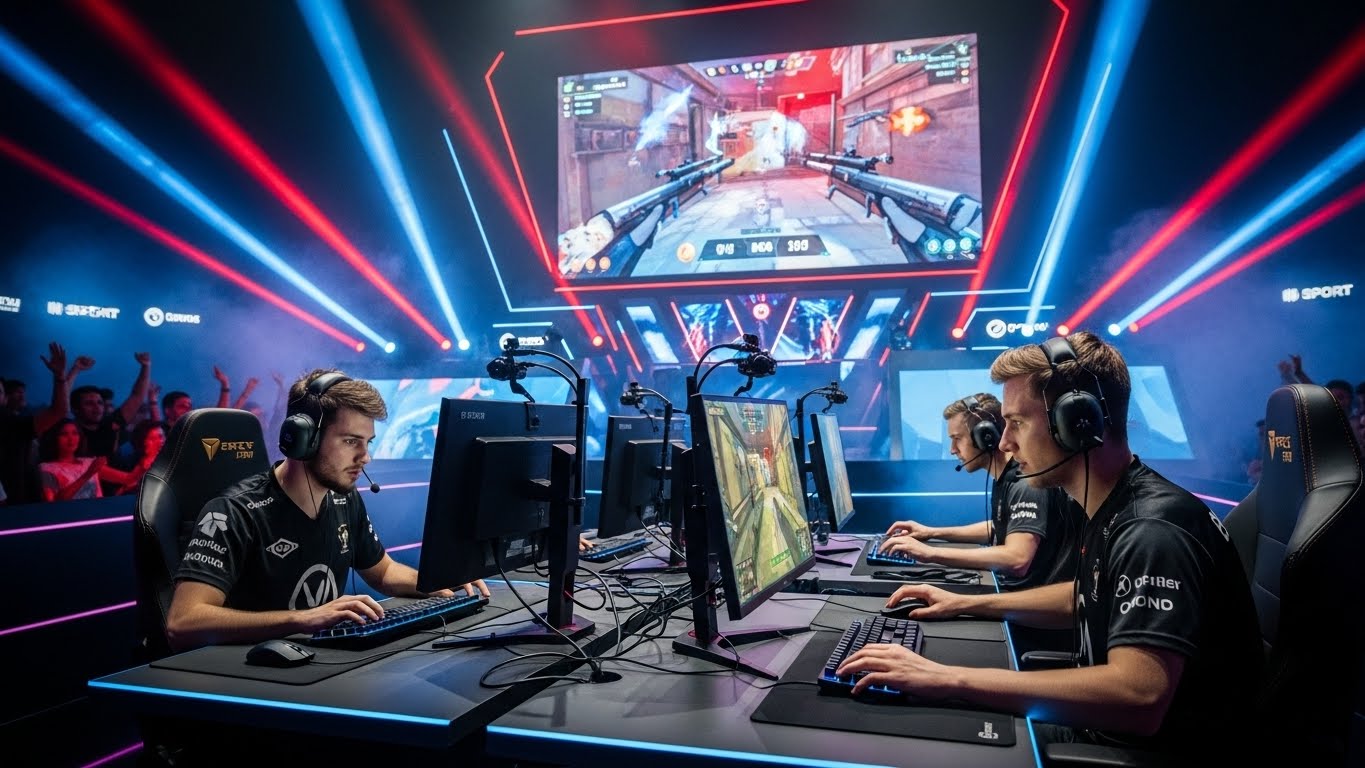
Esports is rarely an individual effort. In team-based games, chemistry and communication often matter more than individual brilliance. That’s why professional teams invest extensive time in scrimmages — controlled practice matches against other high-level teams.
Scrims simulate tournament environments. Teams test strategies, refine coordination, and practice shot-calling under realistic conditions. During these sessions, communication is heavily emphasized. Players practice using concise and effective language, relaying information clearly without clutter or hesitation.
After each scrim, teams conduct debriefs where coaches and analysts review decisions, highlight strengths, and address weaknesses. This constant cycle of play, feedback, and adjustment builds cohesion and trust among teammates.
The best teams also maintain adaptability during scrims, testing alternative compositions or unconventional tactics to expand their strategic playbook.
Mindset and Mental Training
Mental discipline is one of the most underrated yet vital components of professional esports success. Top players know how to remain calm under pressure, recover from setbacks, and stay focused through long tournaments.
Many professionals incorporate mental training techniques similar to those used by Olympic athletes. Visualization exercises help them rehearse success scenarios, while meditation and mindfulness practices improve focus and emotional control.
Dealing with tilt — the frustration from mistakes or losses — is a key skill. Professionals train themselves to reset quickly, often using short breathing exercises or brief pauses to regain composure.
Some organizations hire sports psychologists who teach coping mechanisms, stress reduction strategies, and goal-setting frameworks. This ensures players can handle the intense demands of competition without losing motivation or mental balance.
Consistent Physical Health and Fitness
While esports may seem purely mental, physical health plays a major role in consistent performance. Top players understand that physical endurance, posture, and general wellness directly influence reaction time, focus, and decision-making.
Many professional teams now employ fitness trainers and nutritionists to create routines that maintain peak cognitive and physical performance. Regular stretching, ergonomic setups, and exercises that strengthen the wrists, shoulders, and back prevent injuries like carpal tunnel syndrome or muscle fatigue.
Players also pay attention to sleep patterns, hydration, and diet. Lack of rest or poor nutrition can impair focus and reaction times — disastrous in high-stakes tournaments. Maintaining balance ensures long-term career sustainability.
Emphasis on Game Sense and Strategic Awareness
Mechanical skill may win duels, but game sense wins championships. Elite players develop deep situational awareness — understanding positioning, timing, and opponent behavior. They spend as much time studying the meta and strategies as they do refining mechanics.
Top professionals review not only their own replays but also those of rival teams. They learn common strategies, map control tendencies, and rotation timings. In MOBAs like Dota 2 or League of Legends, understanding wave control, vision, and objective timing becomes second nature.
FPS players, on the other hand, focus on map control, economy management, and opponent psychology — predicting where enemies will move based on previous patterns.
Developing strong game sense requires both experience and deliberate practice. Pros often scrimmage with specific tactical goals, such as perfecting retake strategies or timing objective pushes, to build instinctual responses.
Controlled Experimentation and Adaptability
The esports meta is never static. Balance changes, new content, and emerging strategies continuously reshape competitive landscapes. The best players stay ahead by embracing adaptability.
Top professionals regularly experiment with new weapons, characters, or playstyles. They treat every patch as an opportunity to expand their skill set rather than resist change. Experimentation during practice allows them to develop versatility — an essential trait when unexpected strategies appear in tournaments.
Players who limit themselves to one rigid style often fall behind when the meta shifts. By contrast, adaptive players maintain relevance across seasons, capable of reinventing themselves as the game evolves.
Coaching, Feedback, and Peer Learning
No player, regardless of talent, can improve in isolation. The best players actively seek feedback from coaches, analysts, and peers. Constructive criticism helps reveal blind spots and accelerate improvement.
Coaches provide an external perspective — identifying inefficiencies in movement, communication gaps, or missed opportunities that players may overlook. Analysts use data to highlight trends in performance metrics, helping players target specific weaknesses.
Peer learning also plays a huge role. In many teams, experienced players mentor newcomers, sharing tactical insights and mindset tips. This transfer of knowledge strengthens the team as a whole and ensures consistent progress across all members.
Top organizations encourage open communication during reviews, allowing players to discuss mistakes without fear of blame. This culture of accountability and collaboration creates an environment where everyone strives for growth.
Utilizing Data and Performance Tracking
Modern esports is increasingly data-driven. Players and teams use performance analytics to measure progress and make informed adjustments. Tools that track accuracy, reaction time, damage output, and positioning efficiency allow players to quantify their development.
Some teams employ artificial intelligence or machine learning systems to analyze gameplay patterns, predict opponent strategies, or optimize practice sessions. These insights help players refine decision-making and timing — two factors that can determine success in close matches.
For individuals, tracking personal statistics over time also helps maintain motivation. Seeing measurable improvements reinforces consistency and encourages disciplined practice habits.
Recovery, Rest, and Work-Life Balance
High-level performance requires sustainable habits. Many aspiring players burn out because they fail to balance effort with recovery. Top professionals, however, understand that rest is as vital as training.
Scheduled breaks, mental downtime, and non-gaming activities help prevent fatigue and keep creativity high. During off-seasons, players often reset by traveling, spending time with family, or exploring hobbies outside of gaming.
Maintaining emotional health ensures longevity in an industry known for its intense demands. The most successful players sustain their careers for years by practicing self-care alongside skill development.
Adaptation to Team Dynamics
Over time, top players learn that their role within a team may change. A player once known for aggression might later take on a leadership or supportive role as team chemistry evolves. This adaptability ensures that every player contributes to team success in the most effective way possible.
Practicing with an awareness of team dynamics — such as learning to set up plays, protect key teammates, or read their communication habits — is a hallmark of high-level professionalism. The ability to synchronize with teammates separates organized teams from individual-centric groups.
Conclusion: The Art of Intelligent Practice
The difference between casual players and professionals isn’t just talent — it’s the intelligence behind their practice. The best esports players treat improvement like a science, combining structure, analysis, and mindfulness to master their craft.
They understand that practice is not merely repetition but reflection, adaptation, and growth. Every warm-up, replay review, and scrimmage contributes to a larger picture of excellence. By focusing equally on mechanics, mindset, health, and strategy, top players achieve sustainable, peak performance.
Ultimately, the lessons from elite esports competitors extend far beyond the screen. Their discipline, attention to detail, and commitment to constant evolution reflect the same values that drive success in any field. Whether you’re an aspiring professional or a casual competitor, adopting these best practice techniques is the first step toward mastery — not just in gaming, but in the pursuit of greatness itself.