





Introduction
Once upon a time, video games lived in the dim glow of living rooms and internet cafes, whispered about by parents who believed they were distractions rather than destinies. Fast forward to the present, and gaming has burst into roaring arenas, where stadium lights bounce off massive screens, where millions of fans tune in from every continent, and where players become legends not by swinging swords forged of steel but ones constructed from keystrokes, strategy, and digital daring. This electrifying universe is called esports, and it is rewriting what society understands as sports, competition, and entertainment. Welcome to the era where pixels meet passion.
The Evolution of Competitive Gaming
To appreciate the colossal force that esports is today, we must peer backward through time. In the late 1970s, the competitive gaming spark was ignited by arcade machines like Space Invaders. Players gathered in arcades as if they were mystical temples of neon light, determined to defend their high score from challengers. For many years, gaming tournaments existed like small underground clubs, proud but unseen by the wider world.
Then the arrival of the internet catapulted the concept from casual experimentation to a global phenomenon. Titles like Counter Strike, StarCraft, and Warcraft became the first banners of professional gaming clans. People discovered that competition did not require physical proximity anymore. A rival in Korea could face an opponent in Europe while thousands watched. The esports storyline was no longer scribbled at the edges of entertainment. It was stepping center stage.
The Main Characters The Games That Changed Everything
Every great story has heroes, and so does esports. These heroes are the games that shaped its foundation and continue to draw crowds who shout the names of teams with the same fervor given to football leagues and cricket champions.
League of Legends transformed strategy gaming into a spectacle of precision teamwork.
Dota 2 turned magical battlegrounds into million dollar epic wars.
Counter Strike Global Offensive exemplified nerve, aim, and tactical brilliance.
Fortnite introduced a colorful tornado of building battles turning teenagers into instant celebrities.
Valorant arrived like a smooth mix of tactical shooting and supernatural powers creating brand new rivalries.
PUBG and Apex Legends invited the world into the thrill of survival where one mistake could turn victory into immediate elimination.
FIFA, Rocket League, and NBA2K proved that virtual sports can capture the same tension and celebration as physical stadiums.
Each game is not merely a title but a realm where courage, instinct, teamwork, and strategy collide. The esports universe did not grow through a single path but through the diversity of genres each cultivating unique fan cultures.
The Rise of Professional Esports Teams
Esports teams today operate with the professionalism once exclusive to traditional sports franchises. Players are recruited like superstar athletes. They attend rigorous training sessions and analyze gameplay footage the way chess masters study future moves. Coaches guide them. Nutritionists nourish them. Psychologists strengthen focus and emotional resilience. Their jerseys display the logos of sponsors who invest millions because they see gaming as the next global marketing megaphone.
Names like Team Liquid, FaZe Clan, T1, Cloud9, OG, and G2 Esports draw devotion across continents. Fans follow them like pilgrims following banners into battle. When they compete live, stadiums rumble with chants. When they win, confetti clouds the air and careers are etched into gaming history.
The Crowd Goes Wild From Screens to Stadiums
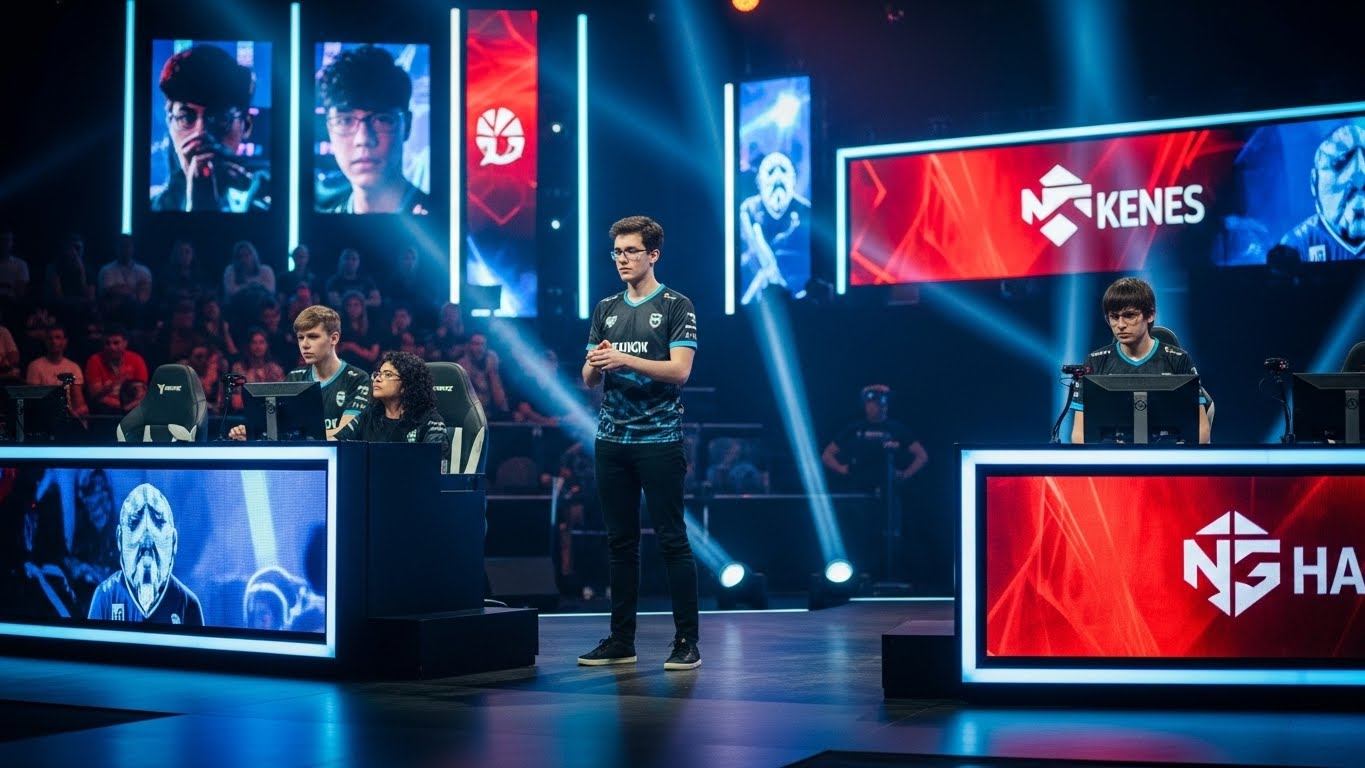
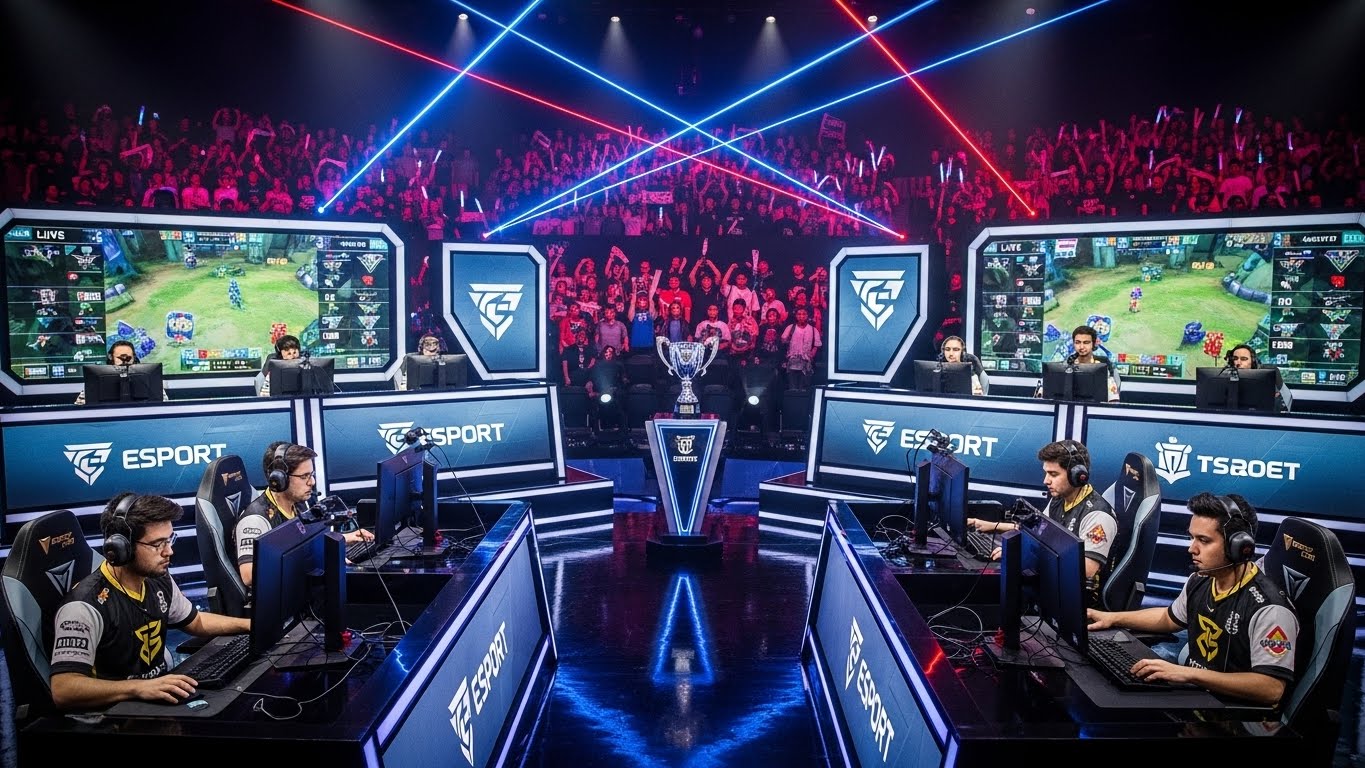
Perhaps the most dramatic transformation is the eruption of live esports events in global arenas. Dazzling lights spin through smoke. Thunderous speakers blast musical intros. Casters narrate every explosive moment with theatrical flair. Every seat is filled by passionate supporters, ready to shout as if they were cheering from inside the game itself.
Championships such as The International for Dota 2 or Worlds for League of Legends become week long festivals of competition and spectacle. In some countries, these gatherings rival the excitement of national holidays. Thousands hold their breath while watching a single team fight in-game for one final push toward triumph. Millions more watch from home, experiencing adrenaline without ever standing from their seats.
The Esports Athlete Breaking Stereotypes
Gone is the outdated picture of gamers lounging lazily without ambition. Esports athletes are honed through discipline, training, and relentless improvement. Reaction times nearly superhuman. Strategy deeper than many real world sports. Their mental focus sharper than razor edges. These players spend hours perfecting their mechanics, increasing stamina, and synchronizing with their teammates like finely tuned instruments in a digital orchestra.
Furthermore, their careers extend beyond just gameplay. Live streaming, content creation, social media influence, and brand endorsements turn them into global icons. When a player signs a contract worth millions, it became clear to the world that climbing leaderboards is more than entertainment. It is a career.
Technology the Throne on Which Esports Sits
The power fueling the esports empire is technology. As internet speeds and streaming platforms evolved, watching live matches became effortless. Viewers can watch every headshot, every spell cast, every breathtaking moment in high resolution. The accessibility of gaming consoles, PCs, and mobile devices has unlocked talent hidden in every corner of the globe. A kid in a small town can now compete with a superstar in a major city.
Virtual Reality experiments tease the future of immersion. Artificial intelligence challenges players to new levels of excellence. Game engines push boundaries of design, transforming the screen into a living battlefield. Esports does not merely follow technological advances. It pushes them further like a race car driver pressing the accelerator past comfortable limits.
The Global Community Gaming Without Borders
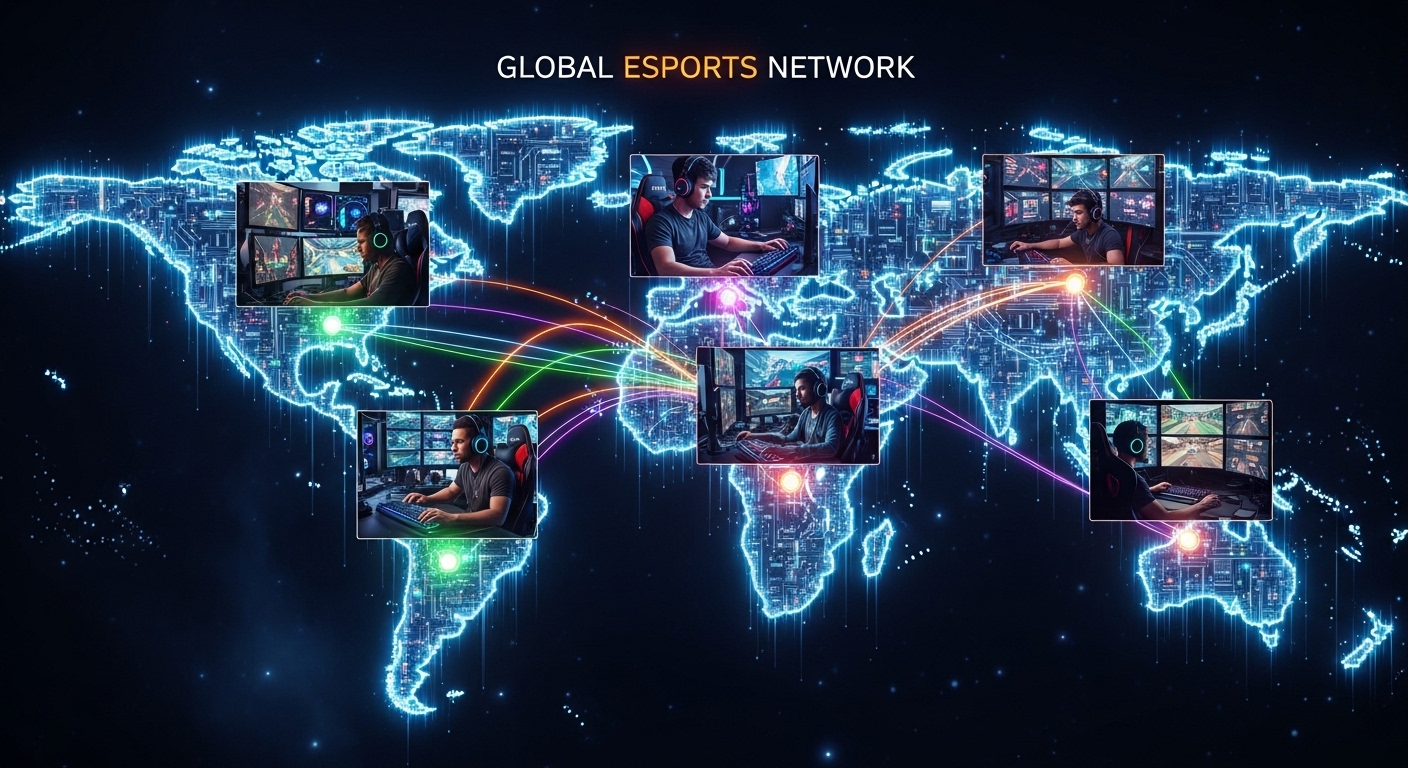
Esports possesses a rare magic the ability to connect humanity. Languages differ, cultures vary, but when the match begins, every fan speaks the same emotional vocabulary. Joy, stress, hope, heartbreak, triumph. People bond over teams, share predictions with strangers, laugh together at professional blunders, and celebrate impossible comebacks.
Streaming platforms allow fans to interact directly with players, turning celebrities into approachable champions. Fans send encouraging messages, create fan art, and build their own in game strategies inspired by professionals. The community stretches across continents, feeding the beating heart of esports.
The Esports Economy A Digital Gold Rush
Where crowds go, money follows wearing a business suit and carrying an eager smile. Sponsorships, endorsements, tournaments, advertising, branding, merchandising, game sales, and media rights have created an economic boom. Esports organizations become multimedia companies. Tournaments award prize pools that rival famous traditional sports events. Entire careers are built around esports from commentators and analysts to event organizers and graphic designers.
Universities offer scholarships for esports athletes. Nations establish esports associations. Job markets expand in unexpected ways. Esports is not only a pastime but a thriving ecosystem feeding thousands of futures.
Mobile Esports Gaming Anywhere
The handheld revolution has rewritten competitive accessibility. Mobile games enable competitors who lack expensive equipment to still climb into the arena. Titles like PUBG Mobile, Free Fire, and Mobile Legends shook the gaming world by proving that champions can be crowned using nothing more than a smartphone and fierce determination.
Now esports is not tied to gaming chairs and desktops. It thrives in busy buses, lunch breaks, and rooftops where players gather late into the night, sharing victories under starlight.
Education and Esports A Smart Combo
Schools and universities recognized that esports provides real value beyond entertainment. Students learn communication, leadership, problem solving, time management, and resilience. Clubs form like miniature guilds. Tournaments teach sportsmanship. Game design programs cultivate future developers and engineers. Many academic institutions now support structured esports paths, blending learning with passion to empower tomorrow’s innovators.
The Challenges Behind the Glory
Not all that shines is free from shadows. Esports faces hurdles that require thoughtful navigation. Player burnout is real and severe, because constant training can exhaust body and mind. Online harassment remains a stain that must be addressed for communities to remain healthy and welcoming. Fair play regulations must evolve to prevent cheating technologies. As the industry grows, ethical standards must strengthen to protect players and guarantee fairness across borders.
Esports and Traditional Sports Rivals or Teammates
At first glance, esports and traditional sports appear like rivals fighting for attention. Yet their relationship is more symbiotic than competitive. Both demand discipline, focus, and the desire to win. Both thrill audiences with unforgettable moments. Athletes from basketball to football enjoy gaming themselves, bridging worlds that once stood apart.
Many traditional sports organizations invest in esports teams, seeing a future where spectators can love both physical and digital competitions. Rather than battling for the throne, the two realms might share it.
The Future of Esports The Sky Is Only the Beginning
Predicting the future of esports feels like gazing at fireworks before the first spark ignites. There is limitless potential on every horizon. More mainstream adoption. More global tournaments. More opportunities for women and underrepresented players to rise. Broadcast innovations that could immerse fans directly into gameplay perspectives. Perhaps even fully virtual stadiums where fans appear as digital avatars cheering shoulder to shoulder.
Esports may become part of the Olympic Games someday, broadcast as loudly as any athletic event. New generations will grow up idolizing professional gamers the way previous generations admired cricket captains or football stars.
Conclusion The New Age of Competitive Greatness
Esports has evolved from a quiet hobby in the shadows to a spectacular global stage bursting with passion and ambition. It is a universe built by dreamers who did not accept that sports must always be physical. They believed competition thrives wherever skill, heart, and courage exist. Esports invites everyone to play, to watch, to belong. It celebrates the brilliance of the human mind in a digital battleground.
We stand at the beginning of a legacy still being written match after match. From small screens to giant arenas. From hidden pastimes to celebrated triumphs. Esports is proof that the world of sport is growing bigger, more colorful, and more connected than ever before. And in this extraordinary evolution, one truth stands tall players are heroes, fans are the fuel, and the future belongs to those brave enough to press start.