





Esports has exploded into a multibillion-dollar global industry, drawing millions of fans across the world. From sold-out arenas to online tournaments with record-breaking viewership, competitive gaming has cemented itself as one of the fastest-growing entertainment sectors. While professional players, organizations, and tournaments often receive most of the spotlight, there’s another group that plays a critical role in shaping the esports ecosystem: streamers.
Streaming platforms like Twitch, YouTube Gaming, Facebook Gaming, and Kick have given rise to a new generation of influencers who don’t just play games — they cultivate communities, spark trends, and amplify the visibility of esports titles and players. These streamers bridge the gap between casual gaming and professional esports, often serving as the entry point for millions of fans.
In this blog, we’ll explore how streamers influence esports popularity, the various dimensions of their impact, and what it means for the future of competitive gaming.
1. The Rise of Streaming in the Gaming World
Before diving into influence, it’s important to understand the role streaming plays in gaming culture.
In the early 2010s, platforms like Twitch and Justin.tv gave gamers a space to broadcast their gameplay live. What started as niche entertainment quickly became mainstream, with millions tuning in to watch favorite creators. This democratized access to gaming content — anyone with a decent computer and internet connection could become a streamer.
As the audience grew, professional esports organizations realized the potential of streaming as a tool for exposure and fan engagement. Esports tournaments, once limited to LAN parties or regional broadcasts, suddenly had global reach through streaming platforms. Simultaneously, popular streamers were helping games explode in popularity simply by playing them in front of large audiences — think of how Among Us and Valorant rose to prominence after being showcased by well-known streamers.
2. Streamers as the Gateway to Esports
Many esports fans don’t start by watching professional tournaments. Instead, they are introduced to a game through streamers.
For example:
- When a new title like Apex Legends or Valorant launches, streamers are often the first to showcase its competitive potential.
- Viewers who enjoy the game on stream may later follow its esports scene.
- Streamers often act as casual educators, explaining game mechanics, strategies, and updates in a way that makes esports more approachable.
In essence, streamers function as the “top of the funnel” for esports viewership. They capture casual audiences and gradually guide them toward deeper engagement with the professional competitive scene.
3. Building Communities Around Esports Titles
Esports thrives on passionate communities. Streamers play a critical role in nurturing these communities by offering a space where fans can discuss matches, celebrate victories, and debate strategies.
Take League of Legends as an example. While Riot Games’ official broadcasts attract millions, countless streamers also host watch parties, provide commentary, and create additional content around the game. This multiplies the amount of conversation happening online and keeps the community active long after official broadcasts end.
Moreover, streamers often build parasocial relationships with their viewers. Fans feel personally connected to streamers, which can translate into loyalty toward the games and esports scenes those streamers support.
4. Streamers as Esports Ambassadors
Streamers often serve as ambassadors for esports organizations and tournaments. Many teams recruit popular streamers not just for their gaming skills but for their influence.
For example:
- Esports organizations like FaZe Clan and 100 Thieves heavily integrate content creators into their brand strategy. Their streamers may not compete professionally, but they attract audiences who then become familiar with the team’s competitive side.
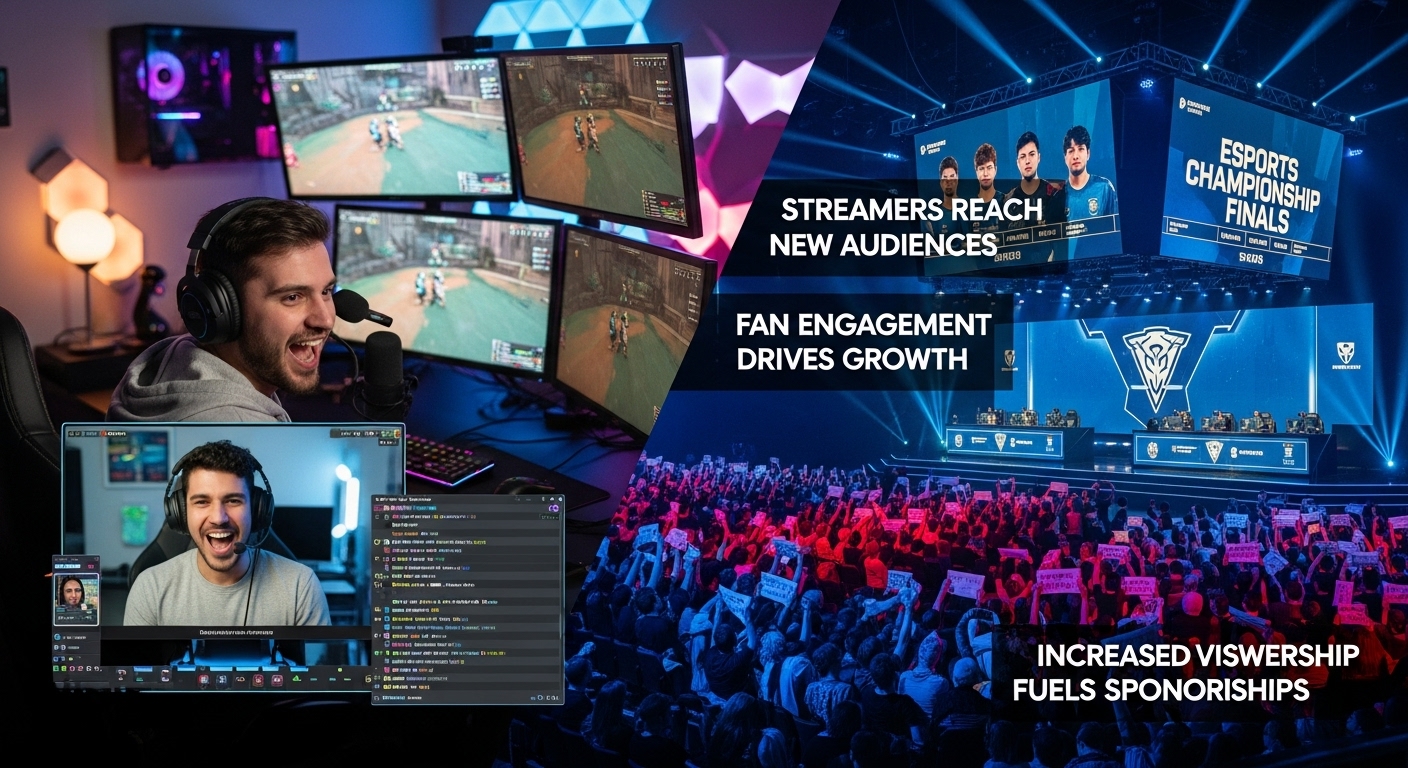
- Tournament organizers frequently partner with streamers to co-stream events, thereby reaching audiences who might not otherwise tune into official broadcasts.
This ambassador role expands esports visibility beyond hardcore fans, pulling in casual viewers who trust and enjoy their favorite creators.
5. Driving Hype for Esports Events
When a major esports event approaches, streamers help build anticipation and hype. They do this in several ways:
- Watch Parties: Streamers host live watch parties of tournaments, offering personal commentary that makes the event more engaging.
- Event Promotion: Partnered streamers often promote events on their channels, giving them added visibility.
- Highlight Reactions: Clips of streamers reacting to big plays often go viral, spreading excitement beyond traditional esports circles.
A clear example is The International (Dota 2) or League of Legends Worlds, where streamers’ reactions to jaw-dropping plays become some of the most shared clips on social media, extending the reach of esports events.
6. Influencing Game Meta and Competitive Play
Streamers don’t just reflect esports popularity — they actively shape it by influencing the meta of games.
- High-level streamers who experiment with strategies often pioneer playstyles that trickle into competitive play.
- When a streamer discovers a new tactic or weapon build, professional players and teams sometimes adopt it.
- Conversely, if streamers heavily criticize a game’s balance issues, developers may be pushed to make changes, directly affecting the esports ecosystem.
For example, in Fortnite, streamers like Ninja and Tfue helped shape competitive strategies through their gameplay. Their visibility made certain playstyles mainstream and, in turn, influenced tournament outcomes.
7. Monetization and Financial Impact
Streamers contribute to esports not only by growing audiences but also by strengthening its financial ecosystem.
- Sponsorships: Brands eager to reach gamers often partner with streamers, and these partnerships can overlap with esports sponsorships, increasing the industry’s overall revenue.
- Merchandise Sales: When a streamer represents an esports team, their fanbase often purchases team merchandise, boosting sales.
- Event Viewership: Streamers hosting co-streams can significantly increase the total audience size, leading to higher ad revenue and sponsorship value for tournaments.
A notable example is the 2022 Valorant Champions Tour, where partnered co-streamers contributed significantly to record-breaking viewership numbers.
8. Bridging the Gap Between Casual and Competitive Audiences
Not everyone watching esports is a hardcore gamer. Streamers help bridge the gap by making competitive gaming accessible and entertaining to a broader audience.
- They explain the game in simple terms for newcomers.
- They provide entertaining commentary, memes, and reactions that keep even non-players engaged.
- They show that esports can be both competitive and fun.
This relatability is crucial for growing esports beyond a niche hobby into a mainstream form of entertainment.
9. Regional and Cultural Influence
Streamers also help localize esports popularity. For instance:
- In regions like South America, Brazil’s Gaules has been instrumental in growing Counter-Strike: Global Offensive viewership by streaming tournaments in Portuguese and creating a community around them.
- In Asia, regional streamers help local audiences connect with global tournaments that might otherwise feel distant.
By adapting esports for local cultures, streamers ensure its popularity continues to expand worldwide.
10. Challenges and Controversies
While streamers undeniably boost esports popularity, the relationship isn’t without challenges:
- Co-streaming rights: Tournament organizers sometimes restrict who can co-stream, leading to debates about accessibility and fairness.
- Toxicity: Some streamers’ behavior can harm the reputation of esports if they display toxic conduct.
- Overshadowing Pros: In certain cases, streamers are more popular than professional players, raising questions about where the spotlight should be.
- Platform Dependence: Esports visibility can be tied to the fortunes of streaming platforms, which may change policies abruptly.
These challenges show that while streamers are vital, balancing their influence with the needs of professional players and organizations is key.
11. Case Studies
To illustrate the influence of streamers on esports popularity, let’s look at a few case studies:
Ninja and Fortnite
Ninja’s rise to fame on Twitch coincided with Fortnite’s explosive growth. His popularity introduced millions of new players to the game, fueling its esports potential. While Fortnite’s competitive scene had its struggles, Ninja’s mainstream media appearances proved how powerful a streamer could be in driving visibility.
Gaules and CS:GO
Brazilian streamer Gaules is often credited with bringing CS:GO to mainstream audiences in Brazil. His co-streams of major tournaments regularly attract hundreds of thousands of viewers, sometimes rivaling official broadcasts. He transformed CS:GO into a cultural phenomenon in Brazil.
Shroud and Valorant
Shroud, known for his FPS mastery, significantly boosted interest in Valorant when Riot Games launched the title. His streams showcased the game’s competitive depth, drawing many fans who later became followers of the Valorant esports scene.
12. The Future of Streamers in Esports
Looking forward, the relationship between streamers and esports will only deepen. A few trends stand out:
- Official Co-streaming Partnerships: Expect more tournament organizers to embrace co-streamers as a way to maximize reach.
- Hybrid Careers: Some professional players will transition into streaming, while some streamers may attempt competitive play, blurring the lines further.
- Integration with Emerging Tech: As platforms like Kick, mobile streaming, and VR expand, streamers will continue shaping how audiences consume esports.
- Greater Brand Involvement: Brands will increasingly leverage streamers as part of esports sponsorships, recognizing their unique reach and authenticity.
Conclusion
Streamers have become one of the most powerful forces in esports. They attract new fans, build passionate communities, influence gameplay strategies, and amplify the visibility of tournaments. From Ninja popularizing Fortnite to Gaules making CS:GO a cultural icon in Brazil, streamers have proven their ability to shape the trajectory of entire esports ecosystems.
While challenges remain — including balancing co-streaming rights, addressing toxicity, and ensuring professional players get their due recognition — it’s undeniable that without streamers, esports wouldn’t be nearly as popular as it is today.